First Niger Bridge Reopening Delayed Until Major Repairs Are Completed – Umahi
“We are not going to be stampeded to open the bridge until the major structural work has been achieved,”
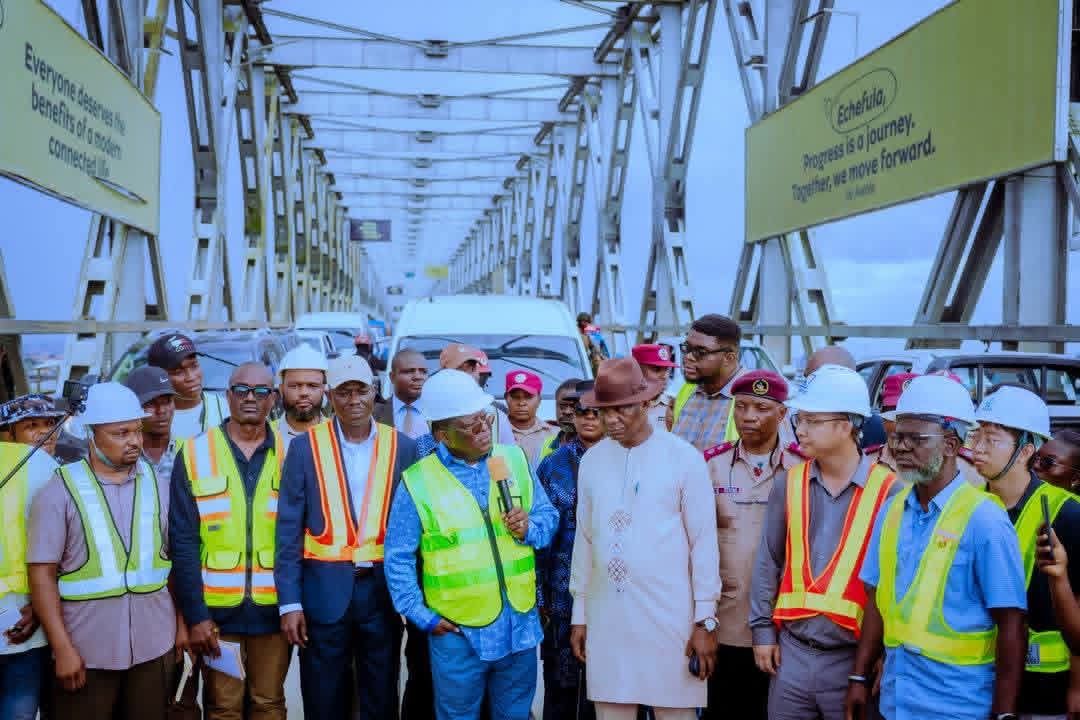
The Federal Government will not reopen the First Niger Bridge to motorists until essential structural repairs are completed, Minister of Works, Senator David Umahi, has said.
Umahi made the disclosure on Wednesday after inspecting rehabilitation work on the bridge at the Onitsha Bridge Head.
The bridge connects Anambra and Delta states and has been temporarily shut to allow emergency repairs.
The closure became necessary after officials discovered that key components of the bridge had been vandalised, including bolts, nuts and parts of the steelwork around the expansion joints.
Although the initial reopening date was September 21, the Federal Government has extended the closure by another week, citing continued rainfall.
During the inspection, Umahi praised the contractor, SKECC, for the progress achieved so far.
He said the damaged bolts had been replaced and properly secured, while the stolen specialised expansion joint had been produced and brought into Nigeria for installation.
The minister said the pace of work over the past 10 days was encouraging but stressed that safety would take priority over pressure to reopen the bridge.
“We are not going to be stampeded to open the bridge until the major structural work has been achieved,” Umahi said.
He directed the contractor to expand the scope of the rehabilitation to cover repainting of structural components, bridge caps and parts of the carriageway.
He also ordered the removal of unauthorised advertisements attached to the bridge.
Additional solar-powered streetlights are to be installed, while CCTV facilities on the bridge are expected to be completed and connected to the surveillance system on the Second Niger Bridge.
Umahi further called for a detailed assessment of structural components both above and below the waterline.
The assessment, he said, should establish the current condition of the bridge and be submitted before the ongoing phase of rehabilitation is concluded.
On the bridge approaches, the minister directed that concrete be considered for sections likely to be reconstructed in the future.
He explained that the approach would reduce the risk of government spending on asphalt that could later be removed during reconstruction.
Umahi said one carriageway could potentially be opened once the concrete reaches the required strength, while rehabilitation continues on the other side.
Speaking on behalf of the governors of Delta and Anambra states, Delta Commissioner for Works (Rural Roads) and Public Information, Charles Aniagwu, commended the Federal Government for the progress made.
Aniagwu recalled that Umahi had inspected the bridge on August 28 and ordered the replacement of vandalised bolts, nuts and expansion-joint components.
He confirmed that the directives had been carried out, while damaged portions of the asphalt surface had also been removed and replaced.
“We are pleased with the speed of work,” Aniagwu said, while thanking motorists and other residents for their patience and understanding during the closure.
He added that the rehabilitation had already produced noticeable improvements and expressed confidence that the repairs would enhance the bridge’s durability.
Enjoyed this? Get the morning brief.
News from Nigeria and Africa, in one free email every day.