Delta Proposes ₦1.236trn Budget for 2027, Sets Aside 65% for Capital Projects
The Delta State Government has proposed a ₦1.236 trillion budget for the 2027 fiscal year, with ₦806.87 billion earmarked for capital projects, as it begins consultations with stakeholders on spending priorities for the coming year.
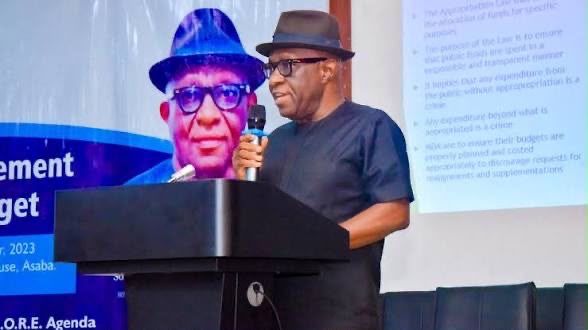
The proposal, presented by the Commissioner for Economic Planning, Sonny Akporokiamo Ekedayen, at a stakeholders’ consultative meeting in Asaba on Friday, October 30, allocates 65.23 per cent of the proposed expenditure to capital development, while recurrent spending accounts for the remaining 34.77 per cent.
Under the proposed estimates, ₦430 billion is set aside for recurrent expenditure, covering the government's routine obligations, while ₦806.87 billion is intended for infrastructure and other development projects.
The consultation also provided an opportunity for the government to review the performance of the 2026 budget, examine revenue generation and receive recommendations from traditional rulers, community leaders, professional bodies and other stakeholders.
Giving an update on the state's fiscal performance, Ekedayen disclosed that Delta generated approximately ₦1.02 trillion in revenue between January and September 2026, representing 79 per cent of its prorated target of ₦1.29 trillion.
He said internally generated revenue stood at ₦209 billion, exceeding the prorated target of ₦187.5 billion, while VAT receipts reached ₦100.7 billion against a target of ₦90 billion.
According to the commissioner, digitalisation of revenue collection has contributed to the improvement in IGR, raising average monthly collections from about ₦8.5 billion in early 2025 to more than ₦11 billion by the fourth quarter of 2026.
Ekedayen also highlighted ongoing government interventions, including the renovation of 150 primary healthcare centres across the state's 25 local government areas, provision of 25 4D ultrasound machines and support for more than 15,000 farmers, small business owners and artisans through programmes such as D-CARES and MORE-Biz-Up.
On industrial development, he disclosed that 99.99 hectares of land at Ogwashi-Uku had been allocated to Olam Agri for a multi-billion-naira animal feed production plant.
The government also reported that more than 80 kilometres of drainage channels had been cleared in parts of Asaba, Warri, Ughelli and Sapele to improve water flow and address flooding.
However, stakeholders at the meeting urged the government to ensure that the proposed spending translates into tangible improvements in the lives of residents.
The Asagba of Asaba, Prof. Epiphany Azinge, welcomed the consultation but called for greater investment in agriculture and employment opportunities for young people.
Similarly, the President-General of the Association of Community Presidents-General, Prince Igwe Nzekwe, advocated sustained agricultural investment and the establishment of an agricultural market in Asaba. He also commended the state's reported fiscal discipline and position on avoiding additional borrowing.
Another participant, Okezie Odugala, called for wider adoption of digital technology in public administration, affordable housing, environmental sustainability and stronger partnerships with private-sector operators and institutions.
He further proposed that state-owned universities should serve as centres for technology development, artificial intelligence research and youth skills acquisition. His recommendations also covered improved waste management, tree planting and erosion control.
In his welcome address, the Permanent Secretary of the Ministry of Economic Planning, Augustine Itawansa, said the consultation was designed to strengthen transparency, accountability and public participation in the budget process.
Ekedayen assured participants that their submissions would be considered in preparing the 2027 estimates.
With more than ₦1.2 trillion proposed for the next fiscal year, attention will now turn to the projects and programmes that receive funding, how the capital allocation is distributed across communities and whether the government's revenue projections can be sustained.
For residents, the real measure of the budget will be its impact on roads, healthcare, education, jobs, agriculture and other services that directly affect household welfare.
The proposal is expected to proceed through the remaining stages of budget preparation and approval.
Enjoyed this? Get the morning brief.
News from Nigeria and Africa, in one free email every day.