NRC Links Warri–Itakpe Train Derailment to Suspected Wheel Defect, Rules Out Vandalism
Four people died and 64 were injured when coaches derailed in Delta State, with braking also under scrutiny.
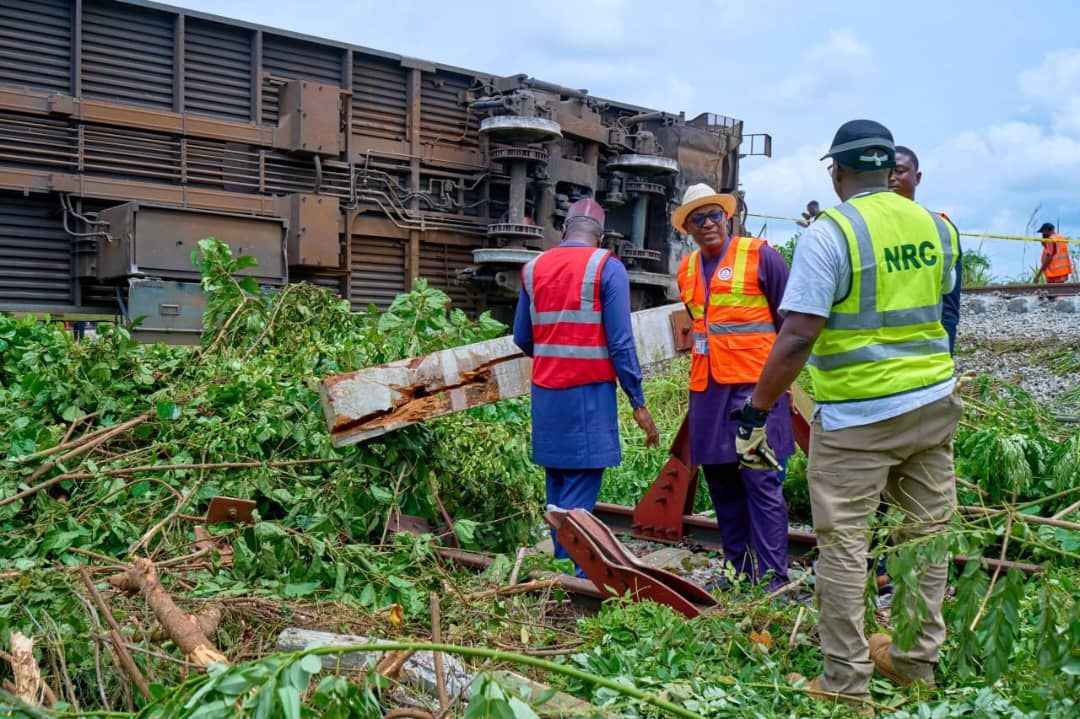
The Nigerian Railway Corporation (NRC) has released its preliminary findings into the June 8 derailment involving the Warri–Itakpe Train Service, pointing to a possible defect in a bogie or wheel as the leading explanation for the accident.
The Corporation, however, stressed that the finding is preliminary and subject to further investigation before a final cause can be established.
According to the report signed by NRC Managing Director, Dr. Kayode Opeifa, the train derailed at about 4:17 p.m. near the Outer Home Signal of the Goodluck Jonathan Railway Station at Kilometre 177, Owa-Oyibu, Delta State, as it approached the station.
The train had left Itakpe at about noon with *482 people on board, comprising 442 passengers and 40 operational personnel.
The derailment involved five coaches, one locomotive and a power car. Three coaches and the power car overturned, while other affected rolling stock left the tracks but remained upright.
Emergency teams from the NRC, Delta State Government, Nigeria Police Force, Federal Road Safety Corps, National Emergency Management Agency, local authorities and medical facilities responded to the scene.
The NRC said all passengers were evacuated within about two hours of the incident.
The Corporation confirmed that four people — three adults and one child — died, while 64 others sustained injuries of varying degrees.
The NRC explained that an earlier figure of five fatalities was revised following verification by the Delta State medical team responsible for receiving and handling the bodies.
Those injured were treated at the Railway Hospital in Owa-Oyibu and other medical facilities in Owa-Oyibu, Owa-Alero and Agbor.
Most patients who were admitted were discharged within 72 hours, while three people, including an NRC employee, remained under specialist care after undergoing surgery.
The investigation involved physical inspection of the accident site, collection and examination of evidence, technical assessment of the locomotive and railway infrastructure, reviews of operational records and interviews with witnesses and emergency responders.
The team also examined the effectiveness of the rescue and medical response following the derailment.
Its preliminary assessment suggests that a sudden bogie or wheel defect may have developed while the train was in motion.
According to the NRC, such a defect could have altered the interaction between the wheels and rails, resulting in excessive impact forces and instability that eventually caused the derailment.
Investigators also noted that the way the train’s brakes were applied may have contributed to the severity of the incident.
The Corporation was careful to describe both factors as working hypotheses, stressing that the final cause will only be determined after the investigation is concluded.
The preliminary report found no evidence of track vandalism at the accident location.
That finding separates the June incident from previous derailments along the same corridor, particularly the November 2025 incidents which the NRC said were associated with vandalised railway infrastructure.
Meanwhile, the Nigerian Safety Investigation Bureau (NSIB) has commenced its own independent investigation into the accident.
The NRC said it would cooperate fully with the Bureau and that any final corrective measures would take into account the findings and recommendations of the independent investigation.
In response to the incident, the Corporation recommended comprehensive inspections of rolling stock and railway infrastructure, stronger maintenance programmes and improvements to operational safety procedures.
It also called for regular emergency preparedness exercises, continuous training for railway personnel and sustainable funding for railway modernisation.
Improved insurance and compensation arrangements for both passengers and railway workers were also identified as areas requiring attention.
The NRC expressed regret over the loss of lives and extended its condolences to the families of those who died.
The Corporation said the damaged section of track has now been fully restored, while the affected locomotives are undergoing reconditioning.
However, the resumption of the Warri–Itakpe service will depend on the completion of detailed safety audits covering the track and railway equipment.
Enjoyed this? Get the morning brief.
News from Nigeria and Africa, in one free email every day.