Who Is Protecting Delta’s Children From Sexual Abuse?
In recent months, disturbing reports of children being sexually abused have continued to emerge from different parts of Delta State, raising serious questions about how well society is protecting its most vulnerable.

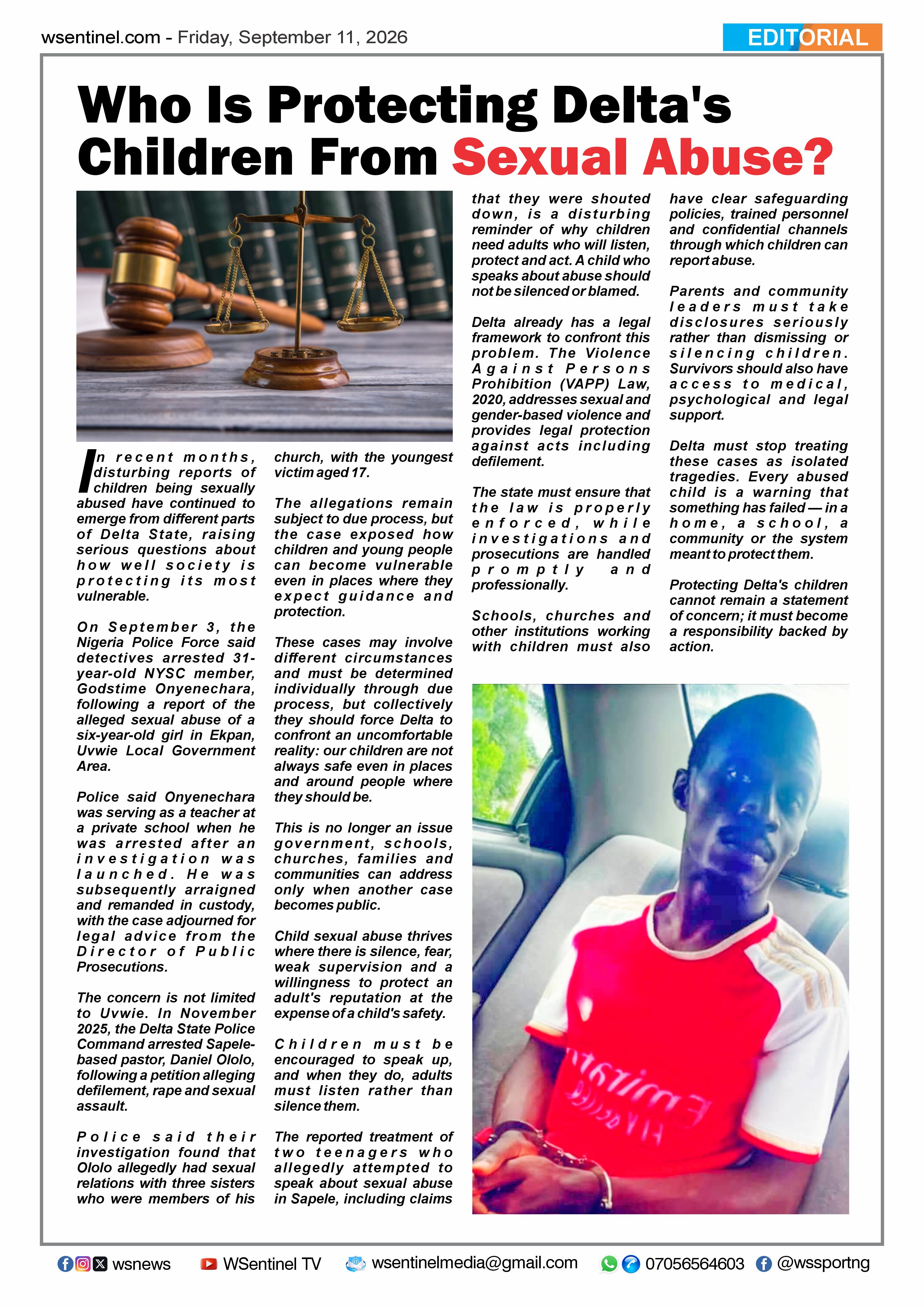
On September 3, the Nigeria Police Force said detectives arrested 31-year-old NYSC member, Godstime Onyenechara, following a report of the alleged sexual abuse of a six-year-old girl in Ekpan, Uvwie Local Government Area.
Police said Onyenechara was serving as a teacher at a private school when he was arrested after an investigation was launched. He was subsequently arraigned and remanded in custody, with the case adjourned for legal advice from the Director of Public Prosecutions.
The concern is not limited to Uvwie. In November 2025, the Delta State Police Command arrested Sapele-based pastor, Daniel Ololo, following a petition alleging defilement, rape and sexual assault.
Police said their investigation found that Ololo allegedly had sexual relations with three sisters who were members of his church, with the youngest victim aged 17.
The allegations remain subject to due process, but the case exposed how children and young people can become vulnerable even in places where they expect guidance and protection.
These cases may involve different circumstances and must be determined individually through due process, but collectively they should force Delta to confront an uncomfortable reality: our children are not always safe even in places and around people where they should be.
This is no longer an issue government, schools, churches, families and communities can address only when another case becomes public.
Child sexual abuse thrives where there is silence, fear, weak supervision and a willingness to protect an adult's reputation at the expense of a child's safety.
Children must be encouraged to speak up, and when they do, adults must listen rather than silence them.
The reported treatment of two teenagers who allegedly attempted to speak about sexual abuse in Sapele, including claims that they were shouted down, is a disturbing reminder of why children need adults who will listen, protect and act. A child who speaks about abuse should not be silenced or blamed.
Delta already has a legal framework to confront this problem. The Violence Against Persons Prohibition (VAPP) Law, 2020, addresses sexual and gender-based violence and provides legal protection against acts including defilement.
The state must ensure that the law is properly enforced, while investigations and prosecutions are handled promptly and professionally.
Schools, churches and other institutions working with children must also have clear safeguarding policies, trained personnel and confidential channels through which children can report abuse.
Parents and community leaders must take disclosures seriously rather than dismissing or silencing children. Survivors should also have access to medical, psychological and legal support.
Delta must stop treating these cases as isolated tragedies. Every abused child is a warning that something has failed — in a home, a school, a community or the system meant to protect them.
Protecting Delta’s children cannot remain a statement of concern; it must become a responsibility backed by action.
Enjoyed this? Get the morning brief.
News from Nigeria and Africa, in one free email every day.